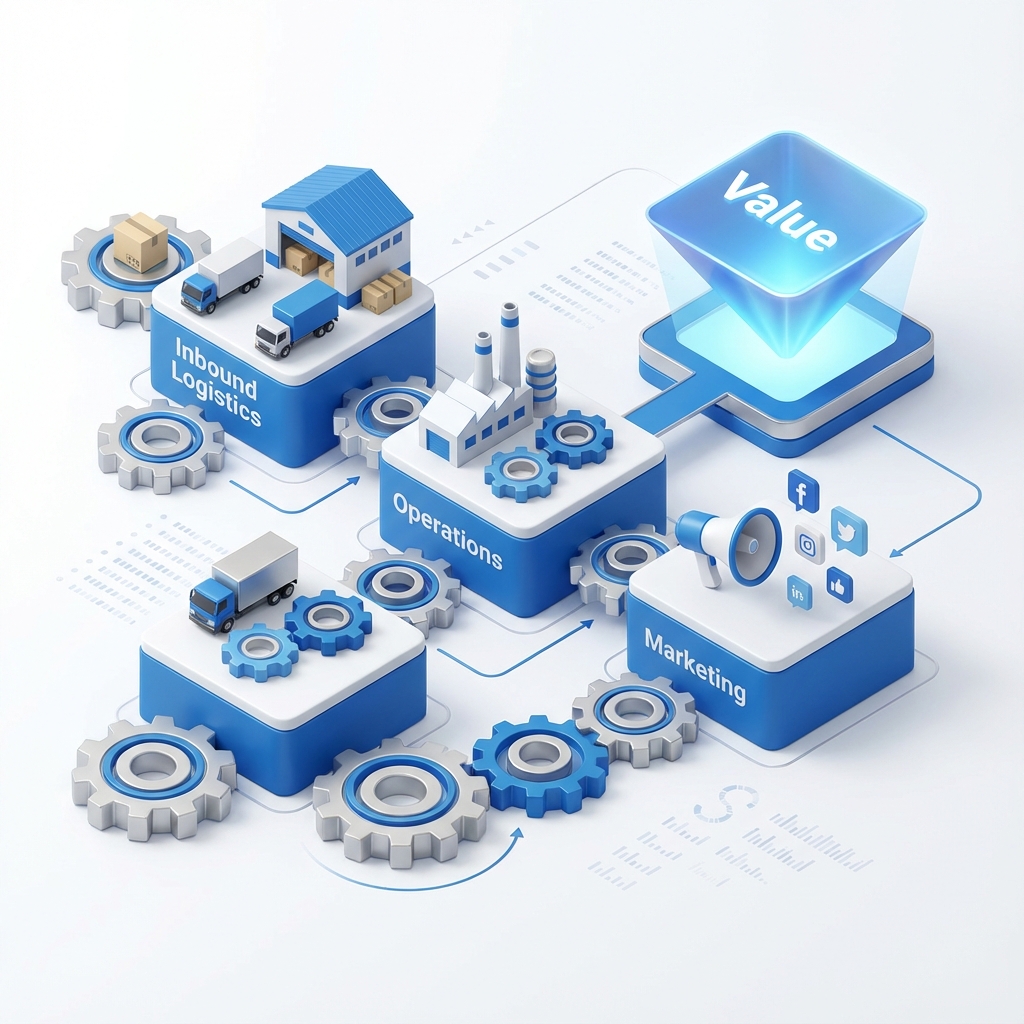
The Value Chain is a framework for designing internal activities to deliver value to customers in alignment with organizational strategy. The goal is to highlight value creation over operational costs and manage costs to enhance product or service value under the condition of 'delivering appropriate value to customers'. ห่วงโซ่คุณค่า เป็นการออกแบบกิจกรรมภายในองค์กรเพื่อส่งมอบคุณค่าให้กับลูกค้าที่สอดคล้องกับกลยุทธ์องค์กร โดยเป้าหมายในการออกแบบนี้เพื่อให้เห็นถึงการสร้างคุณค่าของสินค้ามากกว่าต้นทุนการดำเนินการ และแนวทางในการจัดการต้นทุนเพื่อให้สินค้าหรือบริการมีมูลค่าสูงขึ้นภายใต้เงื่อนไขของ 'การส่งมอบคุณค่าที่เหมาะสมแก่ลูกค้า'
The Value Chain consists of three main parts: (1) Primary Activities, (2) Support Activities, and (3) Margin (Value Added). ห่วงโซ่คุณค่าแบ่งออกเป็น สามส่วนได้แก่ (1) กิจกรรมหลัก (2) กิจกรรมสนับสนุน และ (3) มูลค่าเพิ่ม
Margin (Value Added) มูลค่าเพิ่ม (ราคาขายและอัตราผลกำไร)
Value Added is the result of performing activities in the value chain to transform low-value raw materials into higher-value products. This increased value is assessed through selling price and profit margin. มูลค่าเพิ่ม เป็นผลมาจากการดำเนินกิจกรรมในห่วงโซ่คุณค่าที่จะแปลงจากวัตถุดิบที่มีมูลค่าต่ำเป็นสินค้าที่มีมูลค่าที่สูงขึ้น โดยมูลค่าที่สูงขึ้นนั้นสามารถประเมินได้จาก ราคาขายและอัตราผลกำไร
Primary Activities กิจกรรมหลัก
Primary activities are directly related to the physical creation, sale, maintenance, and support of a product or service. There are five main activities: กิจกรรมหลักเป็นกิจกรรมที่เกี่ยวข้องกับการเพิ่มมูลค่าของวัตถุดิบให้เป็นสินค้าสำเร็จหรือกึ่งสำเร็จที่มากขึ้น โดยมีกิจกรรมหลักอยู่ 5 กิจกรรม ดังนี้
- Inbound Logistics: Receiving, storing, and distributing inputs internally. Includes material handling, warehousing, inventory control, and vehicle scheduling. โลจิสติกส์ขาเข้า: กิจกรรมที่เกี่ยวข้องกับการเตรียมปัจจัยนำเข้า เช่น การจัดซื้อจัดหาวัตถุดิบ การรับสินค้าเข้า การจัดเก็บ และการบริหารจัดการคลังสินค้า
- Operations: Transforming inputs into the final product form. Includes machining, packaging, assembly, equipment maintenance, and testing. การผลิต/การดำเนินการ: กระบวนการในการแปลงวัตถุดิบให้เป็นสินค้า ซึ่งเกี่ยวข้องกับการวางแผนการผลิต การตรวจสอบคุณภาพ และการบำรุงรักษาเครื่องจักร
- Outbound Logistics: Collecting, storing, and physically distributing the product to buyers. Includes warehousing, delivery vehicle operation, order processing, and scheduling. โลจิสติกส์ขาออก: กิจกรรมที่เกี่ยวข้องกับการจัดเก็บสินค้าสำเร็จ การขนส่ง และการจัดการคำสั่งซื้อของลูกค้าเพื่อส่งมอบสินค้า
- Marketing and Sales: Providing a means by which buyers can purchase the product and inducing them to do so. Includes advertising, promotion, sales force, channel selection, and pricing. การตลาดและการขาย: กิจกรรมที่สร้างความต้องการสินค้า ทำให้ลูกค้าเข้าถึงสินค้า และการกำหนดราคา รวมถึงการจัดการคำสั่งซื้อ
- Service: Providing service to enhance or maintain the value of the product, such as installation, repair, training, parts supply, and product adjustment. การให้บริการ: กิจกรรมสำคัญที่เพิ่มมูลค่าให้กับลูกค้า เช่น การอบรมการใช้งาน การซ่อมบำรุง และการบริการหลังการขาย
Support Activities กิจกรรมสนับสนุน
Support activities sustain the primary activities and each other by providing purchased inputs, technology, human resources, and various firm-wide functions. กิจกรรมสนับสนุนเป็นกิจกรรมที่จะสร้างให้เกิดสินค้าหรือบริการรวมถึงคุณค่าที่เตรียมส่งมอบให้กับลูกค้า ประกอบด้วย 4 กิจกรรม ดังนี้
- Procurement: The function of purchasing inputs used in the firm’s value chain, including raw materials, supplies, and other consumable items as well as assets such as machinery, laboratory equipment, office equipment, and buildings. การจัดซื้อจัดหา: เกี่ยวข้องกับการจัดหาวัตถุดิบ อุปกรณ์ และสินค้าสิ้นเปลืองต่างๆ เพื่อสนับสนุนทั้งองค์กร
- Technology Development: Activities involved in designing and developing the product and the processes used to produce it. การพัฒนาเทคโนโลยี: เกี่ยวข้องกับการพัฒนาสินค้าและกระบวนการผลิตในองค์กร
- Human Resource Management: Activities involved in recruiting, hiring, training, developing, and compensating all types of personnel. การจัดการทรัพยากรบุคคล: เกี่ยวข้องกับการสรรหา พัฒนา และดูแลรักษาพนักงานที่มีประสิทธิภาพเพื่อสร้างความได้เปรียบให้กับองค์กร
- Firm Infrastructure: Activities such as general management, planning, finance, accounting, legal, and government affairs that support the entire value chain. โครงสร้างพื้นฐานองค์กร: กิจกรรมด้านการวางแผนกลยุทธ์ การเงิน บัญชี กฎหมาย และการตรวจสอบ
Conclusion บทสรุป
Optimizing the Value Chain allows businesses to identify sources of competitive advantage, whether through cost leadership or differentiation, ultimately delivering superior value to the market. การปรับปรุงห่วงโซ่คุณค่าช่วยให้ธุรกิจสามารถระบุแหล่งที่มาของความได้เปรียบทางการแข่งขัน ไม่ว่าจะเป็นด้านต้นทุนหรือความแตกต่าง เพื่อส่งมอบคุณค่าที่เหนือกว่าให้กับตลาด
Credits: Compiled by Asst. Prof. Dr. Parameth Voraseyanont, Graduate School of Management and Innovation, KMUTT. Ref: CRAFT LAB. เรียบเรียงโดย ผศ. ดร. ปารเมศ วรเศยานนท์ บัณฑิตวิทยาลัยการจัดการและนวัตกรรม มหาวิทยาลัยเทคโนโลยีพระจอมเกล้าธนบุรี อ้างอิง: CRAFT LAB